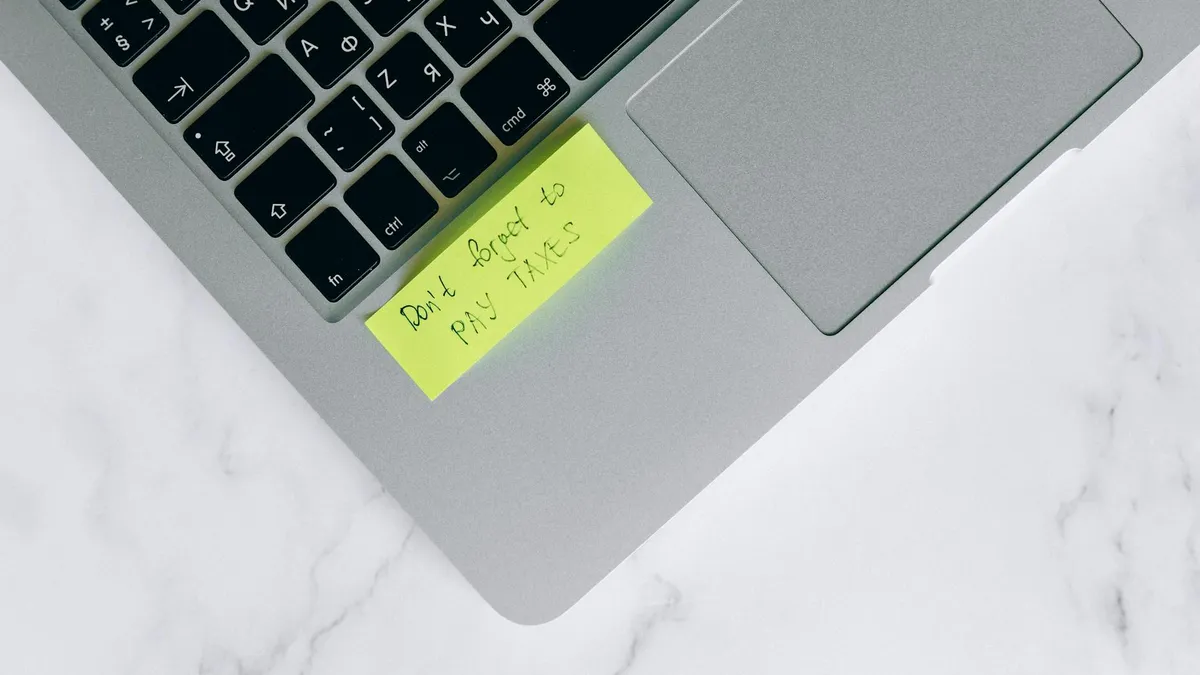
VeriFactu 2026: complete guide for SMBs — deadlines, requirements and compliance
VeriFactu is no longer a rumour or a pilot project. It is the regulation that will change how Spanish businesses issue and record invoices starting in 2026. If you run an SMB operating in Spain, this article is your roadmap: what VeriFactu is, when it affects you, what you need and how to prepare step by step.
Table of Contents
- Key takeaways
- What exactly is VeriFactu?
- Official timeline: when does it take effect?
- Technical requirements for your invoicing software
- Penalties for non-compliance
- 5 steps to comply with VeriFactu in your SMB
- Common mistakes to avoid
- How Salesly simplifies your VeriFactu transition
- Frequently asked questions
Key takeaways
| Point | Details |
|---|---|
| VeriFactu is mandatory from 2026 | Companies with revenue >€8M enter the first phase; all others follow in later phases. |
| Your software must be certified | Only AEAT-certified programs will be able to issue valid invoices under VeriFactu. |
| Penalties reach €50,000 | Using uncertified software or failing to send records can cost up to €50,000 per fiscal year. |
| Preparing now saves costs | Adapting processes early avoids last-minute emergencies, errors and unnecessary fines. |
What exactly is VeriFactu?
VeriFactu is the invoice verification system driven by Spain’s tax agency (AEAT) under the Regulation on Requirements for Invoicing IT Systems (RSIF), approved by Royal Decree 1007/2023.
In practical terms, it requires that:
- All invoicing software generates an electronic record for every invoice issued.
- Each record includes a cryptographic hash guaranteeing the invoice has not been tampered with.
- Records are sent to the AEAT automatically and in near-real time (or stored for later submission, depending on the chosen mode).
The goal is to eliminate opaque invoicing and dual-bookkeeping software. The AEAT wants full traceability from issuance to tax filing.
How it differs from the SII: The Immediate Information Supply system (SII) already existed for large companies (revenue >€6M). VeriFactu extends the obligation to all businesses and freelancers, with different and stricter technical requirements for the software itself.
Official timeline: when does it take effect?
The rollout is divided into phases based on company size:
| Phase | Affected businesses | Estimated date |
|---|---|---|
| Phase 1 | Annual revenue >€8 million | 1 July 2026 |
| Phase 2 | Remaining companies and corporations | 1 January 2027 |
| Phase 3 | Freelancers and micro-enterprises | 1 July 2027 |
Important: These dates are as estimated at March 2026. The calendar may shift, but the direction is clear: the government will not delay implementation indefinitely. Companies that wait until the last moment will find software vendors overwhelmed and fewer options available.
Pro tip: Don’t wait for your phase. If your ERP or invoicing software already offers the VeriFactu update, activate it now. The sooner you validate the flow, the fewer surprises when it becomes mandatory.
Technical requirements for your invoicing software
VeriFactu doesn’t just change the process — it imposes specific technical requirements on the software you use to invoice:
1. Invoice record generation
Every invoice issued must generate an electronic record with mandatory fields: issuer Tax ID (NIF), invoice number, date, tax base, VAT rate, VAT amount and chained hash.
2. Chained cryptographic hash
Each record includes a SHA-256 hash that chains with the previous invoice. This creates an unalterable chain: if someone modifies an intermediate invoice, the chain breaks and the AEAT detects it.
3. Submission to the AEAT
Two modes:
- VeriFactu with immediate submission: The software sends each record to the AEAT in real time (or within a maximum of 4 days). This is the recommended option.
- VeriFactu without immediate submission: Records are stored locally with the same structure and hash, but submitted on AEAT request. Less automation, but higher risk during inspections.
4. Software certification
The invoicing software must comply with the RSIF and declare its conformity. Vendors must register with the AEAT. If your software is not certified, you will not be able to issue valid invoices.
5. QR code on invoices
All invoices must include a QR code allowing the recipient to verify its existence in the AEAT system. This QR is mandatory on both printed and PDF invoices.
Penalties for non-compliance
Spain’s Anti-Fraud Law (Law 11/2021) establishes specific penalties for VeriFactu non-compliance:
| Offence | Penalty |
|---|---|
| Using uncertified software | Up to €50,000 per fiscal year |
| Failing to generate invoice records | Up to €150 per omitted record (minimum €1,000 per quarter) |
| Tampering with or deleting records | Up to €600,000 (very serious infringement) |
| Missing QR code on invoices | Up to €10,000 per fiscal year |
These penalties apply to both the software user (the company) and the software manufacturer. Saying “my program didn’t do it” is not a valid defence — the responsibility is shared.
5 steps to comply with VeriFactu in your SMB
Step 1: Audit your current software
Ask your invoicing software provider:
- Is your software in the VeriFactu certification process?
- When will the update be available?
- Will submission to the AEAT be automatic or manual?
If your provider doesn’t have a clear answer, start looking at alternatives. Holded, Sage, A3 and most Spanish ERPs are already working on their updates.
Step 2: Review your full invoicing workflow
VeriFactu demands traceability from the source. Review:
- Where does the data for each invoice come from? (From a quote? A spreadsheet? Copied manually?)
- Are there incorrect or incomplete tax details in your contacts? (Tax ID, legal name, fiscal address)
- How many manual steps are there between an order and its invoice?
Every manual step is a failure point. The fewer, the better.
Step 3: Connect your sales process with your ERP
If your sales team uses one tool for quotes and another for invoicing, data is duplicated and errors multiply. The solution is to integrate the flow: quote → order → invoice, with data flowing automatically.
Salesly integrates natively with Holded and Business Central, syncing contacts, products and orders bidirectionally. Tax details are validated at the quote stage and reach the ERP clean for VeriFactu invoice generation.
Step 4: Clean up your contact database
VeriFactu requires every invoice to contain correct tax details. Invest time in:
- Verifying the Tax ID (NIF/CIF) of all active customers
- Completing legal names and fiscal addresses
- Removing duplicates and obsolete contacts
This step is tedious but prevents rejections and errors once VeriFactu is live. Do it now, while there’s no pressure.
Step 5: Run a pilot test
Before it becomes mandatory, issue a batch of test invoices with your updated software:
- Verify that records are generated correctly
- Check that the chained hash works
- Confirm the QR code appears on invoices
- If using immediate submission, validate that communication with the AEAT is stable
Catching problems in a test is free. Catching them in production with the AEAT can cost up to €50,000.
Common mistakes to avoid
“I’ll worry about it when it’s mandatory” — Software vendors will face demand spikes in the weeks before each phase. If you wait, you’ll encounter support queues, rushed updates and less time to validate.
“My accountant handles everything” — Your accountant files taxes, but VeriFactu operates at the invoicing software level. If your program doesn’t comply, your accountant can’t compensate.
“It only affects large companies” — Phase 1 targets large companies, but Phases 2 and 3 cover all corporations and freelancers. The difference is only a matter of months.
“Excel spreadsheets and PDF invoices are enough” — No. VeriFactu requires electronic records with cryptographic hashing. A manually generated PDF does not meet the technical requirements.
How Salesly simplifies your VeriFactu transition
Salesly is not invoicing software — it is your sales management platform that connects the sales process with invoicing. This distinction is key for VeriFactu:
- Quotes with validated tax details: Tax ID, legal name and VAT rate correct from the first commercial contact. By the time the invoice is generated in your ERP, the data is already verified.
- Quote → order → invoice flow: No manual copying, no data duplication, no transcription errors. Create quotes that convert into orders with one click.
- Native ERP integration: Salesly syncs orders with Holded and Business Central automatically. Your ERP generates the VeriFactu invoice with clean data.
- Client portal with digital signature: Quote approval via the client portal generates an acceptance record that complements the required traceability.
- Control dashboard: Visualise the entire flow from opportunity to invoice in Salesly’s analytics dashboard.
Salesly ensures commercial data reaches your ERP correctly. Your ERP ensures the invoice complies with VeriFactu. Each tool does what it does best.
Try Salesly free and prepare your sales process for VeriFactu →
Frequently asked questions
Does VeriFactu replace the SII?
No. The SII remains in effect for companies already using it (revenue >€6M). VeriFactu is a complementary system that extends the electronic record obligation to all businesses. Some large companies may be subject to both systems.
How much does it cost to adapt my company to VeriFactu?
The main cost is the invoicing software update. Most Spanish providers (Holded, Sage, A3, Contasol) will include the VeriFactu update within their regular subscriptions. The real cost is preparation time: cleaning data, validating workflows and training the team.
Can I still issue paper invoices?
Yes, but with caveats. A paper invoice remains valid as a physical record, but the electronic VeriFactu record must still be generated in the software. Additionally, the paper invoice must include the mandatory QR code.
What if my software provider doesn’t get certified in time?
You will need to migrate to certified software before your mandatory date. This is why it’s important to ask your provider now and have a plan B. The AEAT will publish a registry of certified software you can consult.
Are freelancers on simplified tax regimes exempt?
Taxpayers under the objective estimation regime (módulos) have a different timeline and simplified requirements, but are not completely exempt. The AEAT has indicated that módulos will have adapted record-keeping obligations.
Related articles
CRM for Small Sales Teams: How to Sell More Without the Complexity
Learn how a CRM built for teams of 2 to 10 salespeople improves follow-ups, speeds up deal closure, and eliminates the spreadsheet chaos holding your team back.
CRM and VeriFactu: preparing your sales process for electronic invoicing in Spain
VeriFactu will be mandatory in Spain by 2026. Learn how a sales platform with ERP integration helps you comply without changing your sales workflow.
Digital transformation for SMBs: where to start without wasting time or money
A practical guide to digitising your small business step by step. Which tools to prioritise, what mistakes to avoid, and why a CRM is the first piece of the digital puzzle.